VFD Keeps Tripping — Overcurrent, Ground Fault, Bus Faults
A drive that trips at power-up usually has a failed input stage or shorted IGBT. A drive that trips under load usually has aged DC-bus capacitors or a failing power stage. Both repair well below replacement cost — and repair beats the multi-week lead time on many replacement drives.
What's usually behind it
Shorted IGBT output stage
The most common hard failure. Often announced by an overcurrent or ground-fault trip the moment the drive tries to run. Replaced with new modules and load-tested.
DC bus capacitor aging
Capacitors are the VFD's wear item. Undervoltage trips, ride-through failures, and audible hum precede failure. Full bus recap is routine in our repairs.
Precharge circuit failure
A failed precharge resistor or relay causes bus faults at power-up and can destroy the rectifier if ignored.
Cooling failure
Dead fans and clogged heatsinks cause overtemperature trips and cook the power stage over time. Fans are replaced as standard in our drive repairs.
Narrow it down yourself first
Work through these before you pull anything out of the panel. Several of them will tell you the unit is fine and the fault is somewhere else entirely.
- □Test the motor and motor cable first. An insulation fault downstream is the most common reason a drive fails again shortly after being replaced.
- □Write down the exact fault code and whether it trips on power-up, on start, during acceleration, or only under load once warm — each points somewhere different.
- □Check the heatsink and fan. Overtemperature faults on a dust-packed drive in a hot panel are often a cleaning job, not a repair job.
- □Confirm all three input phases are present and balanced. Input phase loss both causes drive faults and shortens bus capacitor life.
- □If the drive has been in storage for years, say so — it changes how we approach the capacitor bank.
What happens if you send it to us
If the checks above point at the unit, this is the sequence it goes through — the same one every time, so nothing gets skipped because a fault looked obvious.
- 1
Discharge and inspection
The bus is discharged and verified at zero, then the drive is inspected for the physical evidence that dates a failure — vented capacitors, heat-darkened board, corrosion from a damp or chemically aggressive environment, and dust loading in the heatsink.
- 2
Power stage and rectifier test
The input rectifier and the output IGBT stage are tested cold for shorted or open devices. Ground-fault and overcurrent trips are traced to the specific failed device rather than treated as a single generic "output fault".
- 3
DC bus capacitor assessment
Bus capacitors are measured for capacitance and ESR. Drives that have sat unpowered in stores for years are a special case: the oxide layer in an electrolytic capacitor degrades without voltage, and a drive that has been on a shelf can fail immediately on first energisation.
- 4
Pre-charge and control power
The inrush limiting circuit and its bypass, plus the control-power supply, are checked. A drive that trips instantly on power-up or reports undervoltage under load frequently has a failed pre-charge resistor or bypass relay, which is a far smaller repair than the symptom suggests.
- 5
Repair, then run test
After board-level repair the drive is run and its output verified, with the thermal path cleaned and cooling restored, so it returns proven under power rather than merely powering up.
Repairs that fix this
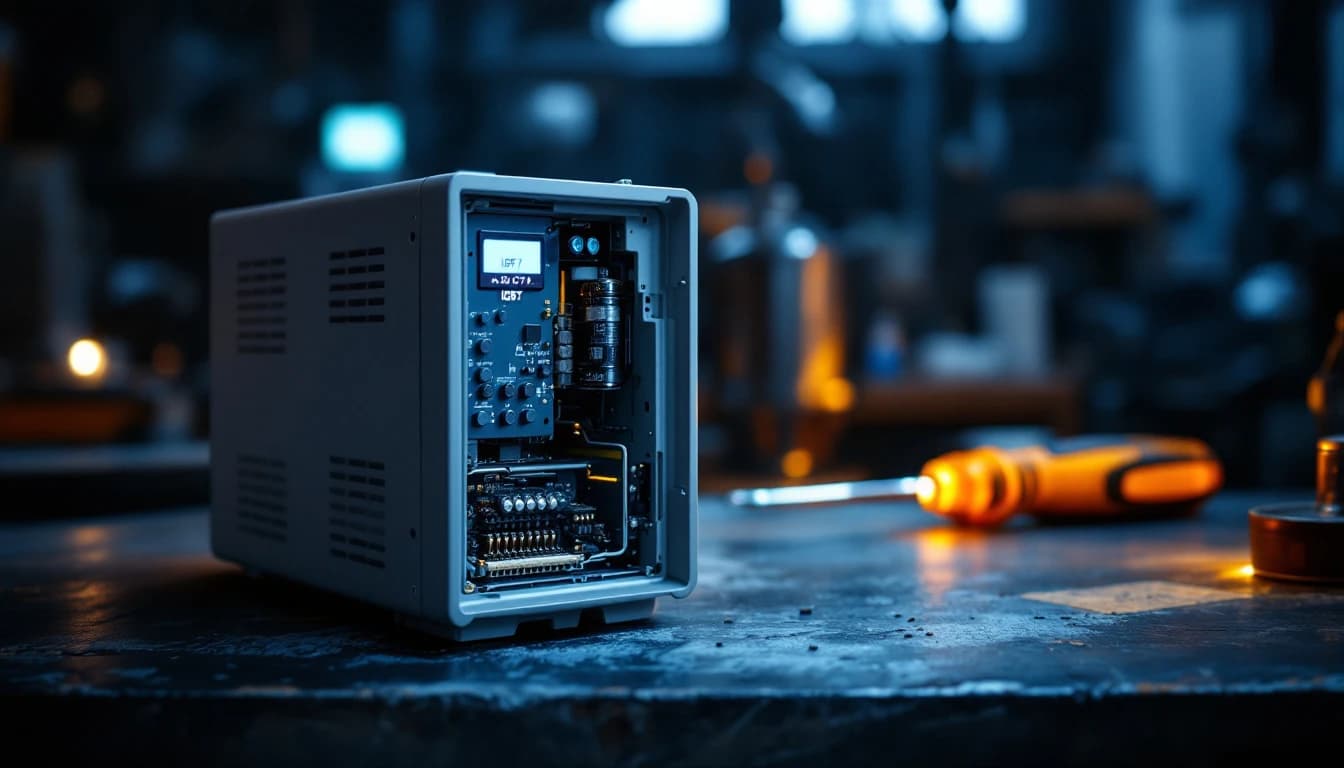
Allen-Bradley
Free evaluationPowerFlex VFD Repair
PowerFlex drives up to 25 HP — free evaluation, typical repairs $350–$900 against four-figure replacements.
3–5 business days in lab · Free evaluation →
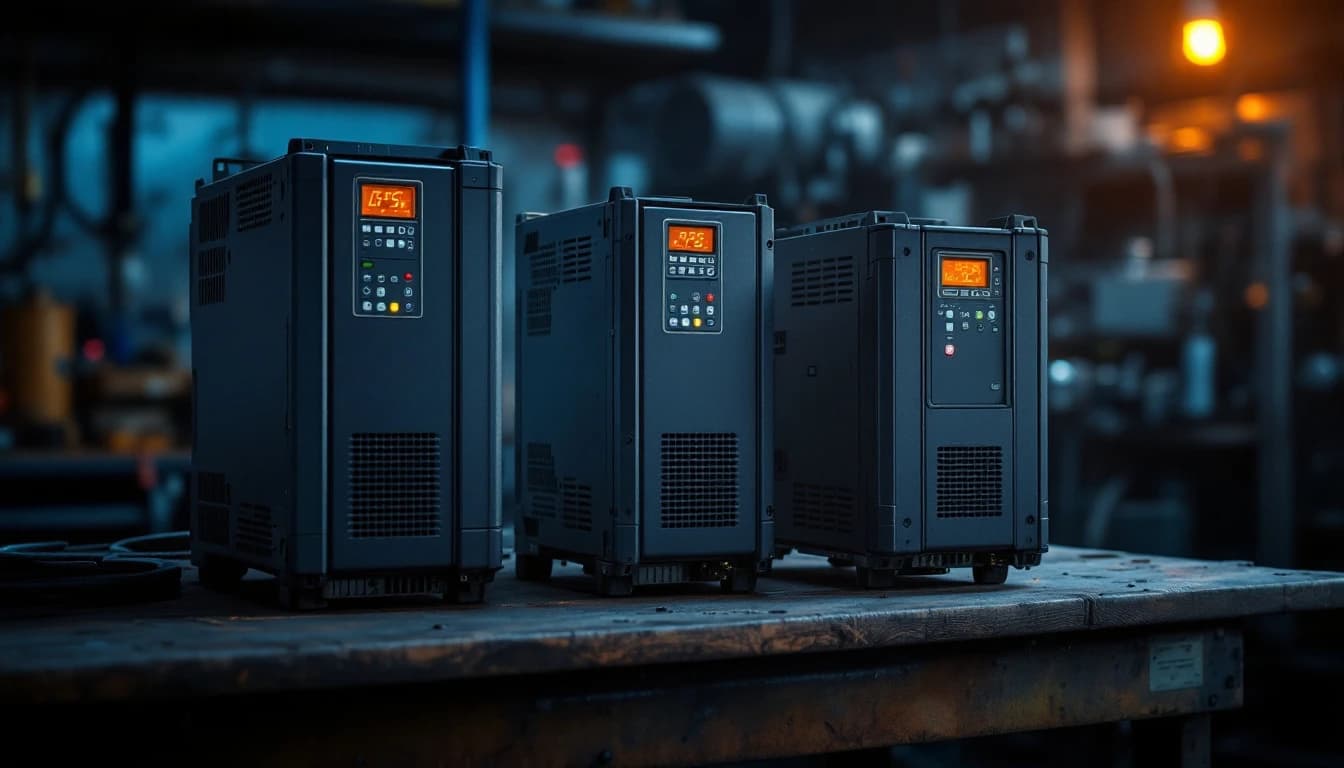
Multi-brand
Free evaluationVFD Repair (ABB, Yaskawa, Danfoss & More)
Most major-brand VFDs up to 25 HP — free evaluation, typical repairs $300–$900.
3–5 business days in lab · Free evaluation →
Machine down? Let's get it back up.
Start a repair online in two minutes, or send us the part number for a free technician review.
The Fixed-or-Free Guarantee: if we can't repair it, you don't pay for the repair.
Call (817) 799-7332 · 📱 Text us a photo of your unit · Email repairs@controlboardlab.com