Multi-brand
Inverter Generator Inverter Unit Repair — Honda EU7000iS / EU6500iS / EU3000iS & Similar — Mail-In
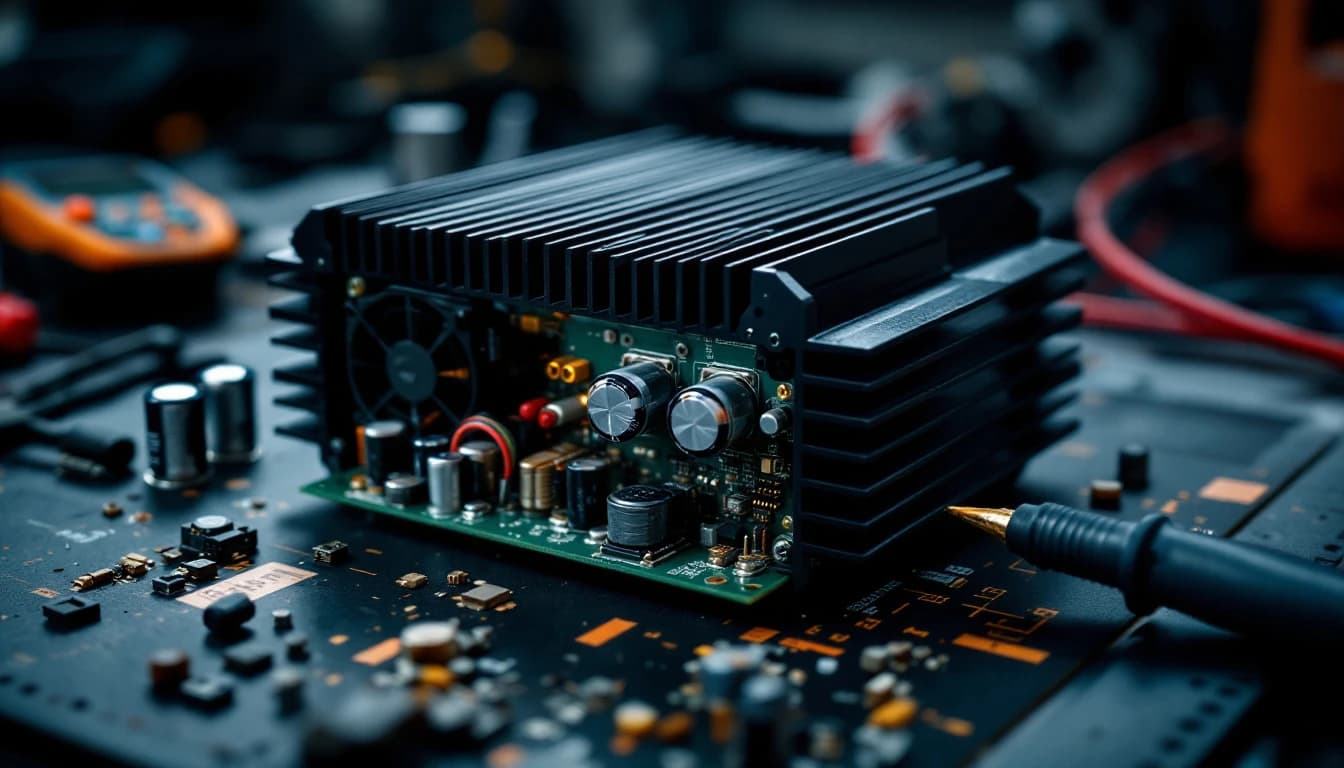
Component-level diagnosis and repair of the inverter unit from inverter generators — Honda EU7000iS/EU7000iSN, EU6500iS, EU3000iS and comparable Yamaha, Champion and Generac units. We find what actually failed (a vented capacitor is often the evidence, not the cause), repair the power stage, drive and control circuitry, replace the aged capacitor set, load-test the output and send the unit back with a written summary of the failure. From $549 with the final price confirmed after evaluation and before any work; 24-month warranty. A repaired original is the cheapest spare you can own for a generator whose replacement inverter costs more than most used generators.
Coverage: Honda EU7000iS / EU7000iSN / EU6500iS / EU3000iS / EU3000i Handi · Yamaha EF-iS series · Champion, Generac, Westinghouse & Predator inverter units (evaluated)
✓Fixed — or it's free
Unrepairable units are refunded; evaluations cost $0
✓24-month warranty
Every repair covered, parts and labor
✓3–5 business days bench time
Rush (1–2 day) and emergency service available
✓Program preserved
Your application and settings stay in the unit
Symptoms this repair fixes
- ✓Engine starts and runs normally but there is no AC output at the receptacles
- ✓Output or overload indicator lights immediately or within seconds of starting
- ✓Low, unstable or sagging output voltage; output collapses when a load is applied
- ✓Generator starts, produces output, then shuts down after a short time
- ✓Vented, bulged or leaking capacitor found on the inverter board
- ✓Burnt smell, scorched board area or a blown fuse on the inverter
- ✓Intermittent output that comes and goes with temperature
Honest limits
- ✕Engine, fuel, carburetor, starter and battery faults — those live outside the inverter; if the engine does not run, start there
- ✕Alternator (stator/rotor) failures — the inverter cannot make output from a winding that is not producing it
- ✕Small-frame potted modules (EU1000i/EU2000i/EU2200i) in most cases — evaluated, refunded if not repairable
- ✕Units where the customer needs a same-day turnaround for an outage in progress — a dealer with the part on the shelf is faster than any mail-in repair
What you get
- ▸Bench diagnosis of the complete inverter unit — power stage, rectifier, bus and control rails, drive and protection circuitry
- ▸Written cause-of-failure summary: what failed, why, and whether the visible damage was the cause or a consequence
- ▸Replacement of the failed power components (rectifier diodes, switching devices, drive parts) where the part is serviceable
- ▸Electrolytic capacitor set replaced — not just the one that vented; its neighbours have the same thermal history
- ▸Corrosion and heat-damage remediation on the board
- ▸Powered-up bench test with the output loaded, waveform and voltage verified, protection behaviour checked
- ▸24-month warranty
Your program is safe
Generator inverter units carry no user program or pairing. A repaired original goes straight back into the generator with no registration, learning or dealer tool required — one reason repairing your own unit beats hunting a used one.
Units we repair
Evaluated with an honest verdict
How Generator Inverter units actually fail
Most units we receive fail in one of a handful of well-understood ways. Here is what each fault looks like from the machine, what is happening electronically, and what we do about it at the bench.
Vented or bulged electrolytic capacitor
- What you see
- One capacitor has vented or split its top; a neighbour of the same value looks normal. Output is absent, unstable, or the unit trips on overload.
- Why it happens
- Electrolytic capacitors dry out under heat and ripple current, and an inverter bolted to a running engine sees both for its entire life. A single vented part in a matched pair usually means that capacitor carried more ripple or saw more voltage than its twin — sometimes just the luck of the batch, sometimes because a regulator or rectifier upstream is feeding it a rail it was never rated for.
- What we do
- We measure the rail that feeds the capacitor before replacing anything. If the rail is clean, the capacitor set is replaced (every part with the same thermal history, not just the one that failed) and the unit is loaded and re-measured. If the rail is wrong, the upstream fault is repaired first — otherwise the new capacitor fails the same way.
No AC output with the engine running
- What you see
- The engine starts and idles normally, the output lamp never comes on, and the receptacles are dead.
- Why it happens
- The inverter is not building or releasing its output: a failed rectifier diode, a dead DC bus, a switching device that has gone open or short, or a drive stage that no longer commutates. A blown fuse or an open sense resistor produces the same symptom from a much cheaper root.
- What we do
- The unit is powered on the bench from a supply standing in for the alternator and each stage is checked in order — rectification, bus voltage, control rails, gate drive, switching, output. The failed stage is repaired at component level and the output verified under load.
Overload lamp immediately or under light load
- What you see
- The overload or output indicator lights within seconds of starting, or as soon as a modest load is connected, and the output shuts down.
- Why it happens
- Either the protection circuitry is responding correctly to a real internal fault (a leaky switching device, a shorted output stage, a current-sense fault) or the sensing itself has drifted so the unit trips on a load it should carry. The two look identical from the receptacle.
- What we do
- We separate a correct protection response from a false one by measuring what the sense circuitry is actually reporting against the real bench load, repair the cause, and prove the unit carries a sustained load without tripping.
Output collapses under load
- What you see
- Voltage reads correctly with nothing plugged in and sags or drops out when a tool, compressor or heater starts.
- Why it happens
- Aged bus capacitors hold a voltage with no current drawn and cannot deliver energy when a load steps on; a weak drive stage or a partially failed switching device shows the same behaviour. An unloaded meter reading cannot see any of this.
- What we do
- Loaded testing is the whole point of this repair — the unit is stepped through resistive and starting loads at the bench and the bus and output are watched for sag and ripple. Capacitors and any weak power devices are replaced and the test repeated.
Runs, then stops after a short time
- What you see
- Output is fine from cold and disappears after a few minutes, or only fails once the generator has been running for a while.
- Why it happens
- Thermal: capacitor ESR rises with temperature, a marginal solder joint on a heavy component opens as the board expands, or a heatsink interface has dried out so a device runs hotter than its protection allows.
- What we do
- The repaired unit is run through a warm soak under load rather than tested cold, and joints on the heavy power components are reflowed where cracking or heat discolouration is found.
Corrosion, water or debris damage
- What you see
- Green or white deposits, a board that smells burnt, or a unit that came out of a flooded shed, trailer or job-site.
- Why it happens
- Moisture and conductive debris bridge tracks and corrode component legs; a small leakage path across a high-voltage section becomes a burn.
- What we do
- The board is cleaned, tracks and legs are inspected under magnification, damaged components and burned tracks are repaired, and the unit is conformal-coated where the original coating was lost. Boards where the damage has crossed the whole board are declined honestly.
The visible damage on an inverter board is usually where the story ends, not where it starts. That is why every repair here comes with a written cause-of-failure summary: a vented capacitor replaced without checking what fed it is a repair that fails again in a year, and a repaired unit that ships with the diagnosis behind it is a spare you can actually trust. Small potted modules (EU1000i/EU2000i/EU2200i) are the exception to the economics and we will tell you to buy the module rather than sell you a repair that is not worth it.
What happens on the bench
The same sequence on every 5-stage repair, so nothing gets skipped because a fault looked obvious.
- 1
Intake and no-load check
The supply is logged and brought up with no load to establish whether it starts at all, and whether it starts and then shuts down — the second behaviour usually indicates protection operating correctly against a genuine internal fault.
- 2
Capacitor assessment
Primary bulk and secondary output capacitors are measured for capacitance and ESR. This is the dominant failure mode in industrial supplies: they run hot, in enclosed panels, continuously, for years, and electrolytic capacitors age out under exactly those conditions.
- 3
Switching and control circuitry
The switching device and its controller are tested, along with the feedback and protection circuitry that decides when the supply shuts down. A supply that trips under load has often lost regulation rather than lost output.
- 4
Repair and rail verification
Failed components are replaced and every output rail is verified for voltage accuracy and ripple. Where capacitor aging is present the affected set is replaced, since the remaining capacitors have the same thermal history.
- 5
Loaded burn-in
The repaired supply is run under load, because that is the only test that matters. A failing supply will hold its rated voltage perfectly with nothing connected and collapse the moment a real rack draws current — which is precisely the fault your PLC was experiencing.
Check these before you ship
Some of these will tell you the unit is fine and the fault is elsewhere. We would rather you find that out now than pay to ship a good unit.
- □Measure the output under real load, not disconnected. A supply that reads correct at idle and sags in the rack is the single most common industrial power-supply fault, and it is invisible on a bench meter with nothing connected.
- □Check whether the rack is drawing more than the supply is rated for. Modules added over the years quietly push some racks past their original supply budget.
- □Look for the physical evidence: bulged or vented capacitor tops, heat discoloration, or a burnt smell. It is not a diagnosis on its own, but it tells us where to start.
- □Note whether it fails from cold, only when warm, or only under a particular machine state. Thermal-dependent failures point straight at capacitor and regulation problems.
- □Confirm incoming supply voltage is stable and within tolerance — a supply repeatedly failing in one panel often has a cause upstream of it.
Repair or replace?
Power supplies are inexpensive relative to what they take down with them, and they fail in a way that is genuinely worth repairing: predictably, in the capacitors and switching section, with a well-understood fix and a long service life afterwards. The case for repair is strongest where the supply is discontinued, where it is an odd form factor that fits one specific rack, or where you want a maintained spare of a unit you already trust. A repaired and load-tested supply is a far better spare than an untested surplus one.
What to ship
- ▸The inverter unit (assembly) only — leave the generator, engine, battery and wiring harness at home
- ▸Model and serial number of the generator, the running hours, and what you observed (lights, sounds, smell, load at the time)
- ▸Photos of any visible damage if you have them — they help us confirm the story the board tells
- ▸Anti-static or bubble packaging inside a sturdy box; the unit is heavy enough to damage itself in a loose carton
Full packing guidance: mail-in instructions.
Ship your unit to
USPS
Control Board Lab
PO Box 120241
Arlington, TX 76012
UPS / FedEx
Control Board Lab
1009 Oakwood Ln # 120241
Arlington, TX 76012
Write your RMA number on the outside of the box and include it on a note inside. Units over 50 lb (large VFDs, spindle drives, industrial PCs in enclosures) ship by freight — contact us before ordering and we will arrange dock-to-dock shipping.
Frequently asked questions
Do you accept Honda EU7000iS inverter units for component-level diagnosis and repair?
Yes. The EU7000iS/EU7000iSN inverter unit is exactly the kind of assembly this service exists for: a high-value power-electronics module that Honda supplies only as a complete unit, built from a rectifier, a DC bus, a switching stage, drive circuitry and a control section that are all individually serviceable. Send the inverter unit on its own — the generator stays with you.
What does the diagnosis cost, and is there a separate diagnostic charge if I go ahead with the repair?
The evaluation is included in the from-price — there is no separate diagnostic charge on a repaired unit. You buy the repair at $549, we evaluate the unit and confirm the final price before any work. If the unit needs more than the base covers (for example a failed switching module), we quote the difference first; if you decline that quote we refund the base minus a $95 evaluation fee and return shipping. If the unit is not repairable at all, the full repair price is refunded minus return shipping. Either way you receive the written findings.
Will you tell me whether the capacitor caused the failure or something else did?
That is the first question we answer, in writing. A vented capacitor is frequently a consequence — of a regulator or rectifier fault upstream pushing ripple or voltage through it — and simply replacing it sends the unit back out to fail the same way. We test the rails that feed it, the rectifier and switching devices, and the drive and protection circuitry before deciding what the root cause was.
Can you test the repaired inverter without my generator?
Yes, to the point that matters: the unit is powered on the bench from a supply that stands in for the alternator, the output is loaded and measured for voltage, frequency and waveform, and the protection circuitry is exercised. What the bench cannot reproduce is your specific engine and alternator, so the last step is always a short run in your generator — the unit ships with the results of the bench test so you know exactly what was verified.
Why repair it instead of buying a new inverter unit?
Because the replacement inverter is the single most expensive part in the generator — on the EU7000iS it has been reported in the high hundreds before dealer labor, and a new generator is several thousand dollars. A component-level repair costs a fraction of that, keeps the original unit that already matched your machine, and gives you a tested spare if you have already fitted a replacement. For small potted modules the math flips, and we tell you so at evaluation.
Can you ship to Hawaii, Alaska or Puerto Rico?
Yes. Standard return shipping is a flat rate to any US address including Hawaii, Alaska and Puerto Rico; transit to those addresses takes longer than the contiguous-US estimate. The prepaid inbound label works the same way.
How long does it take?
Standard bench time is 3–5 business days in lab once the unit arrives, plus shipping each way. Rush (1–2 business days) is +$149. If your generator is your only power during an outage, a dealer with a unit on the shelf is faster — we would rather say that than have you wait on a box.
Repair it from $549
Buy the repair now, get your RMA instantly, and ship the unit today.
The Fixed-or-Free Guarantee: if we can't repair it, you don't pay for the repair.
Call (817) 799-7332 · 📱 Text us a photo of your unit · Email repairs@controlboardlab.com